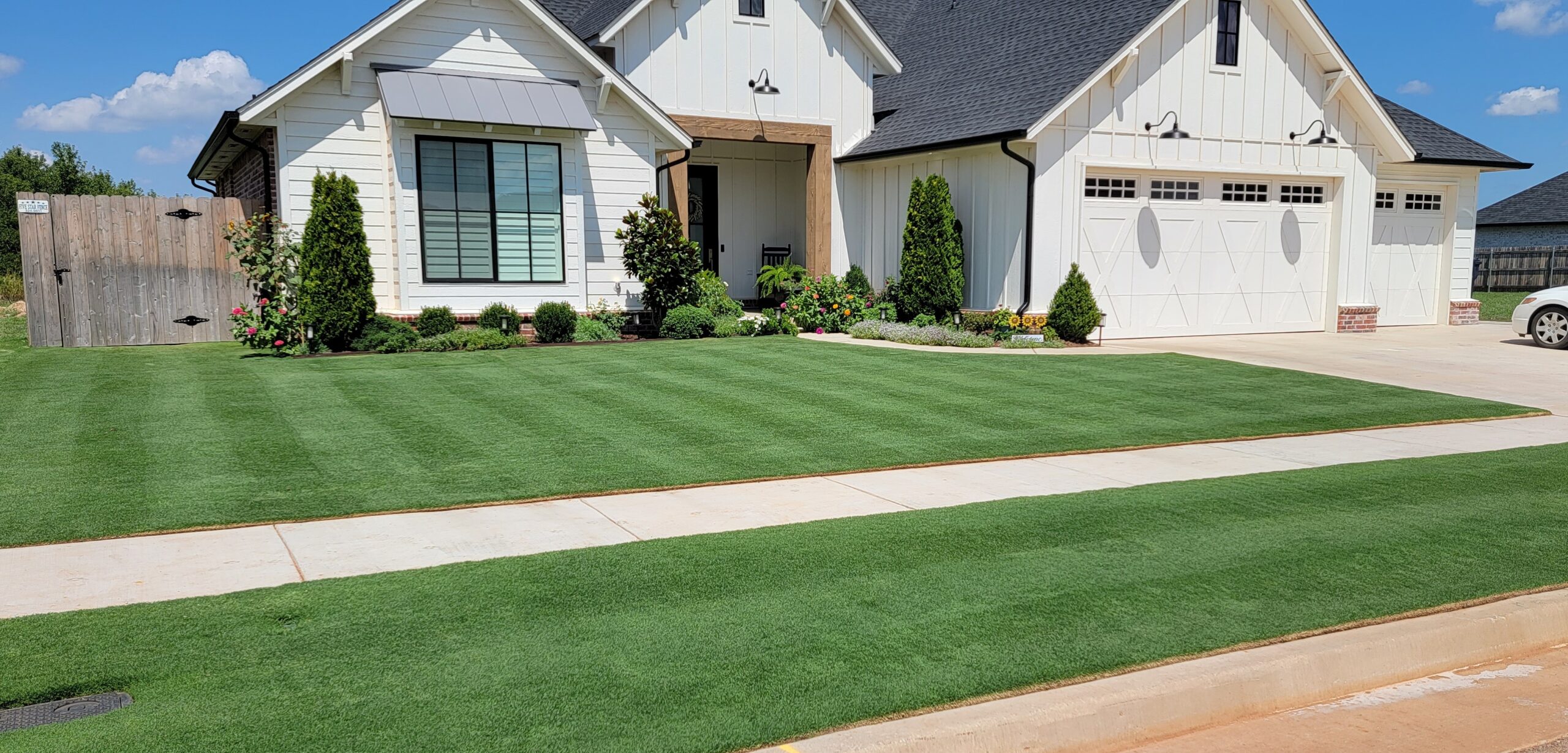
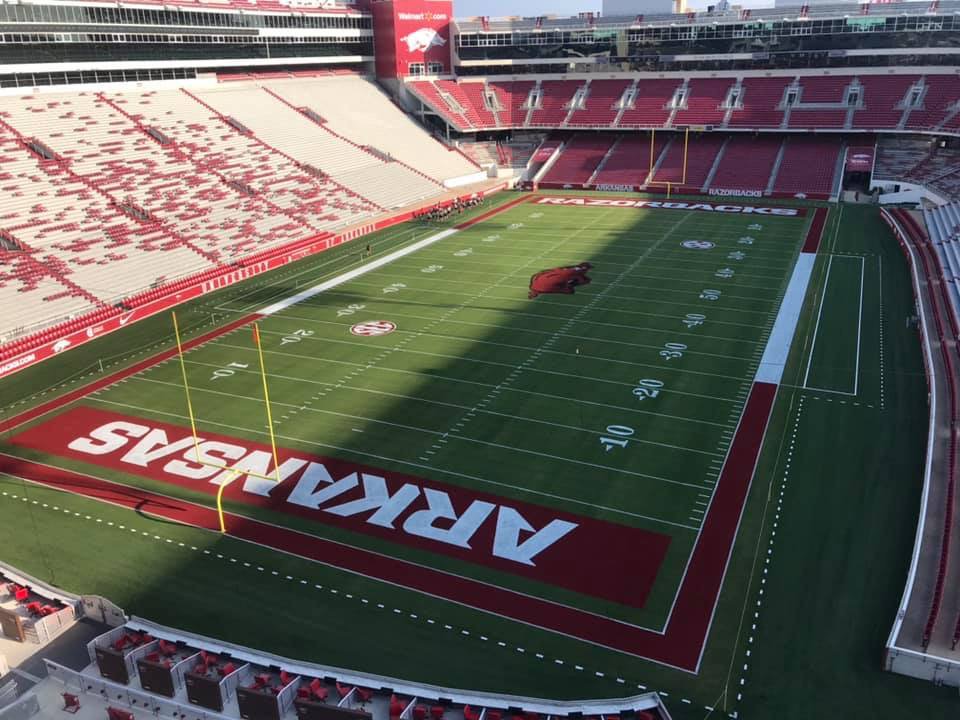
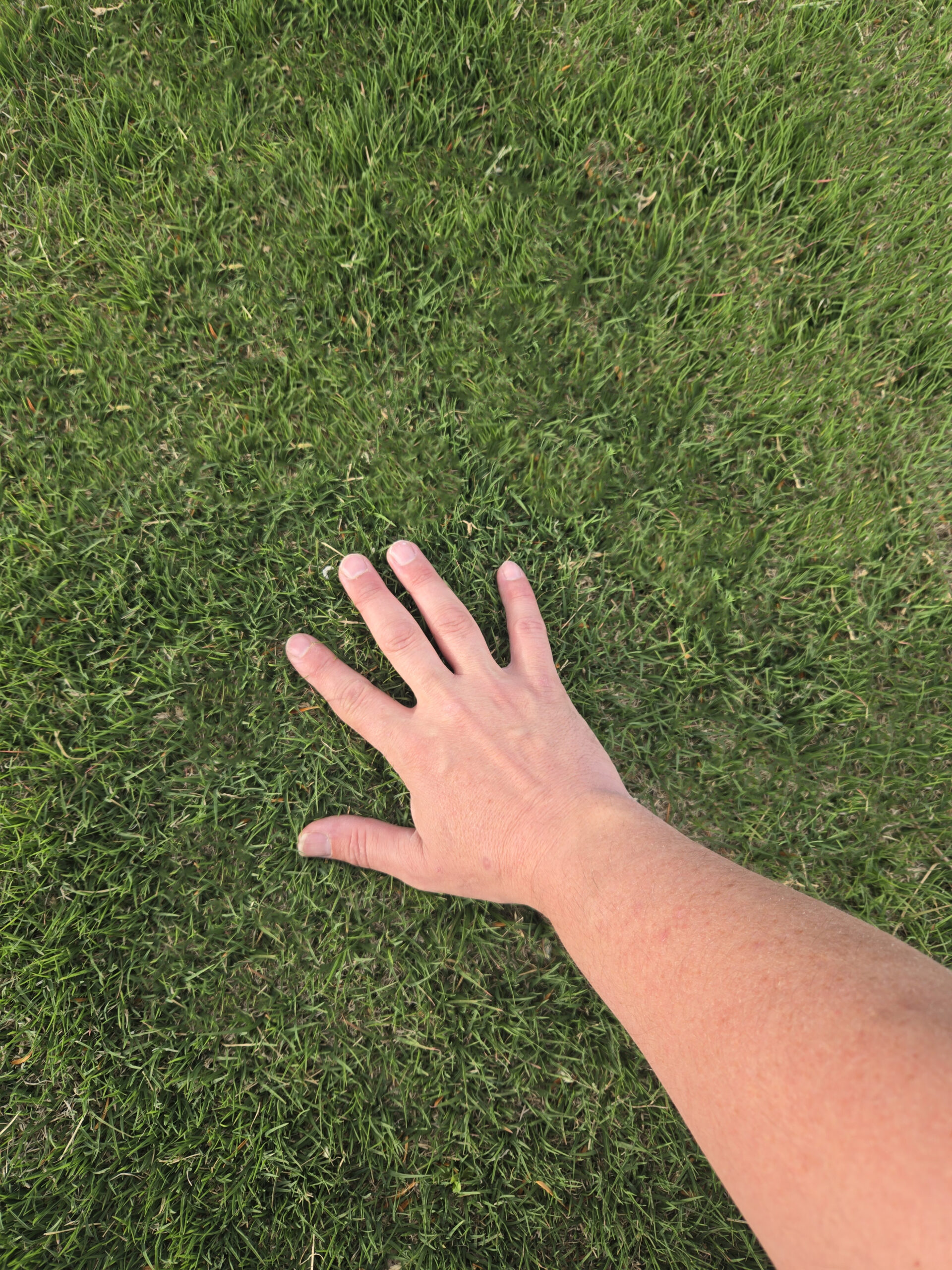
Chanshare Farms worked for 3 years with researchers from BYU and USU. They collaborated with other industry leaders to delist Triploid Hybrid Bermudagrass from the Noxious Weeds List. Tahoma 31 Bermudagrass has proven drought tolerance, requiring 50% less water than Bluegrass. It is cold tolerant and has survived Denver winters with minimal die back. It is also highly wear tolerant and used on many sports fields and golf courses.
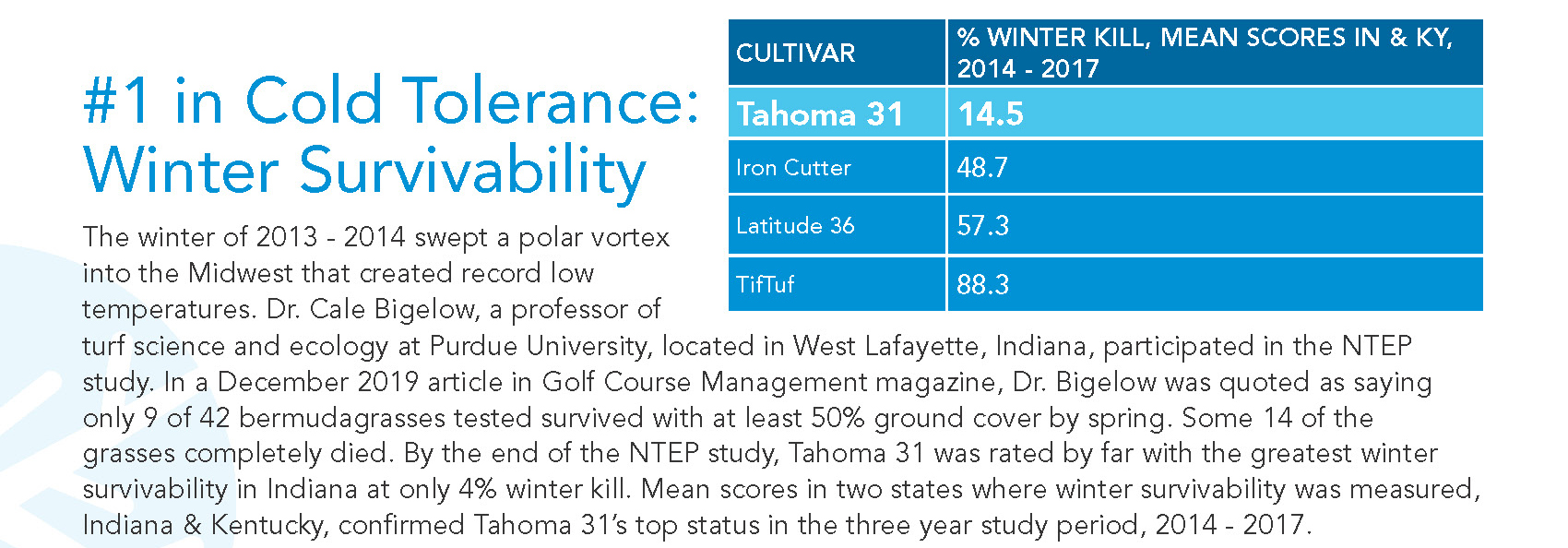
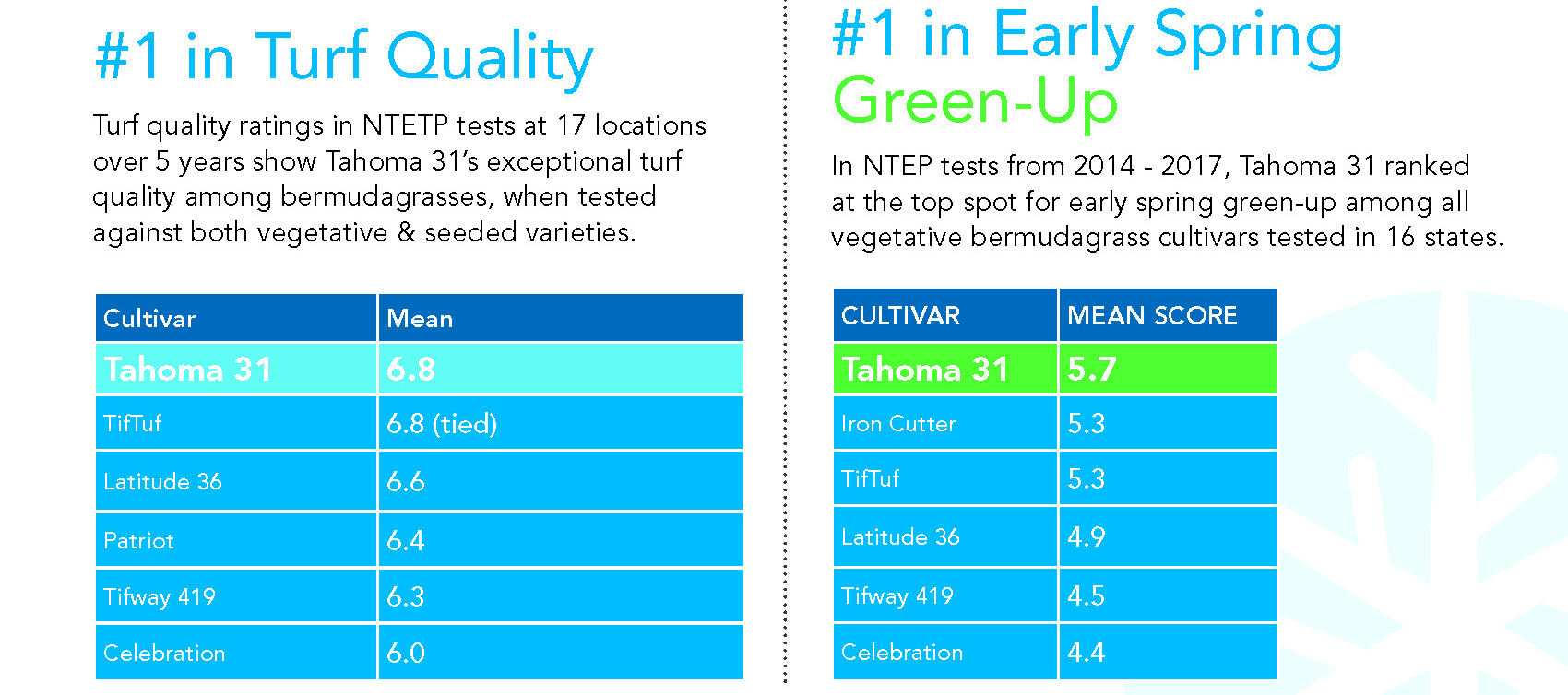
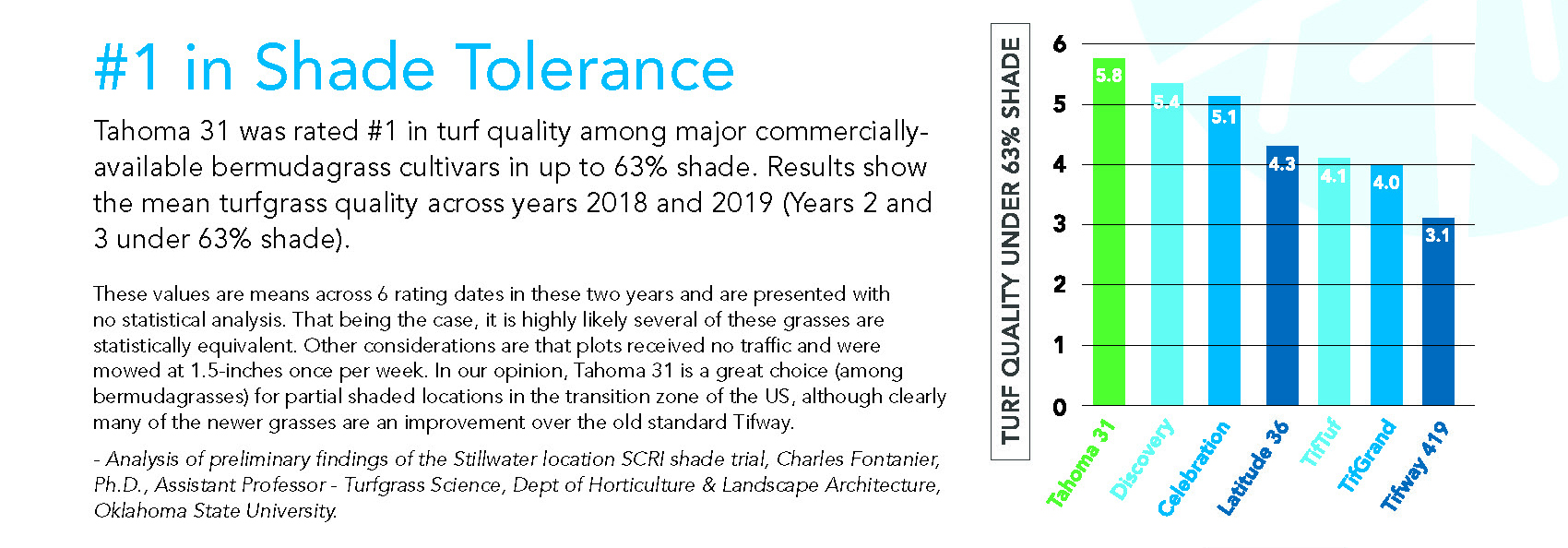
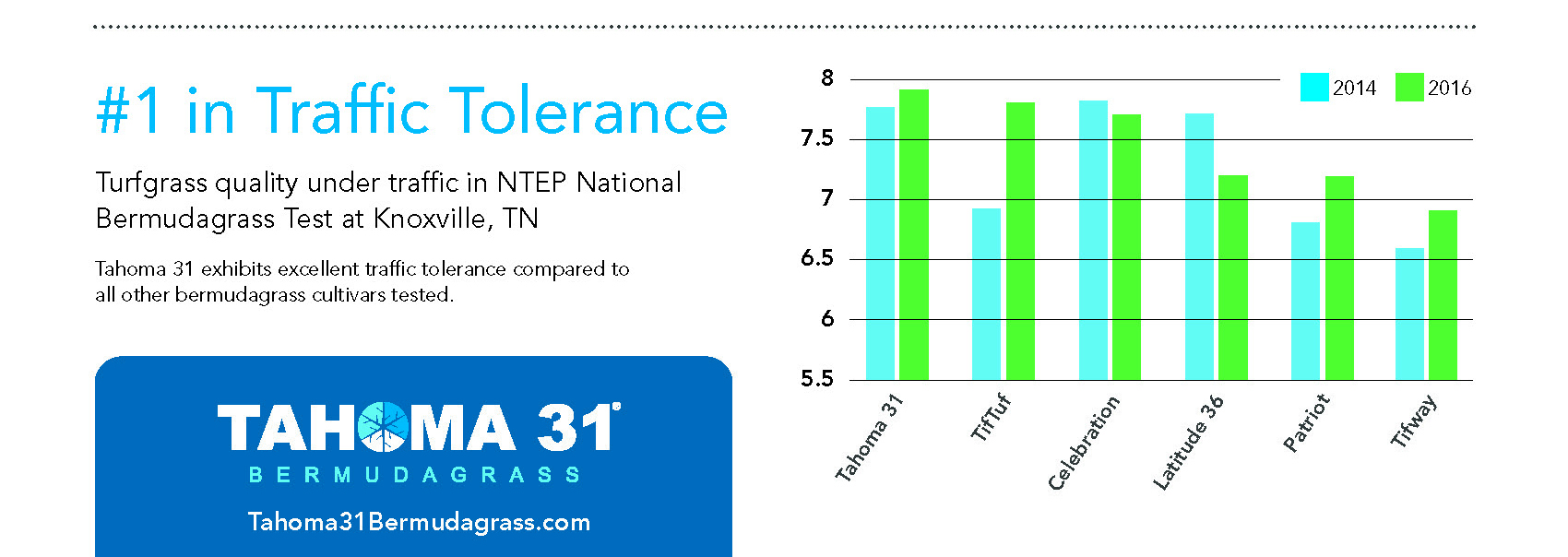
In sod trials performed by the National Turfgrass Evaluation Program (NTEP) Tahoma 31 Bermudagrass ranked #1 over other types of Bermudagrass like Latitude 36, Tifway, Celebration and others.
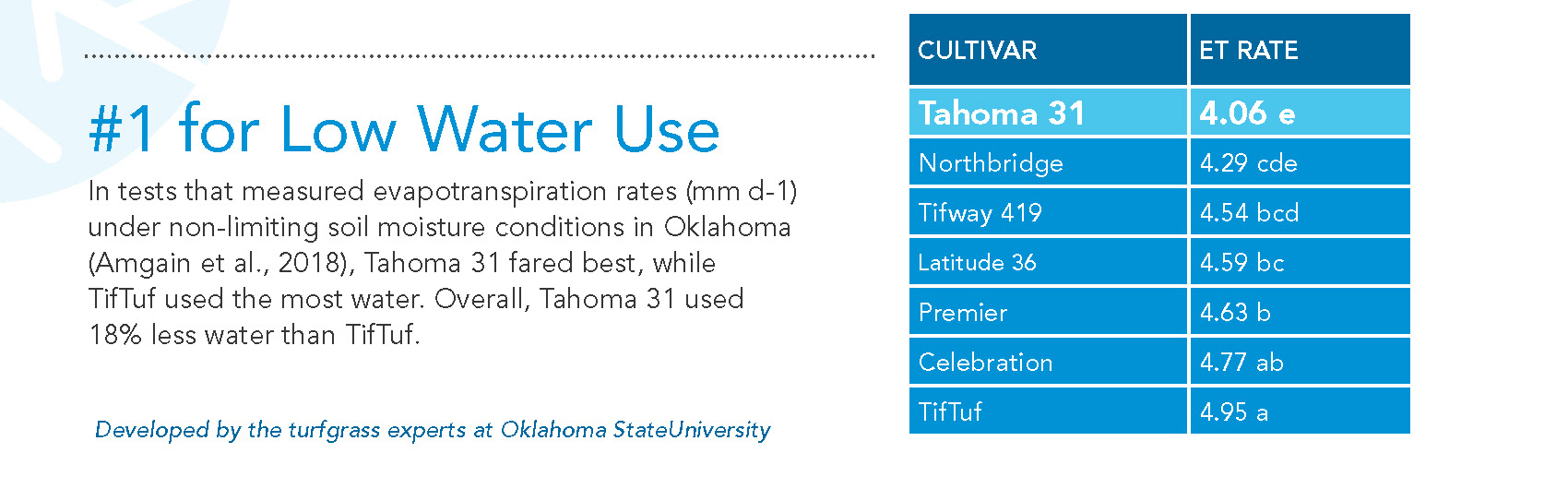
It uses up to 50-70% less water than Bluegrass, and Tahoma 31 Bermudagrass thrives in the summer heat. BYU proved it took 3-6 weeks without watering before drought stress occurred. Conversely, adjacent bluegrass plots started going dormant within a couple days and died off by the end of 6 weeks.
Bermudagrass is a warm season grass so it greens up 3-5 weeks slower that bluegrass in the spring. However, it thrives in the summer heat so, hot Utah summers are ideal. And Bermudagrass requires more consistent fertilization but less nitrogen overall, compared to bluegrass.
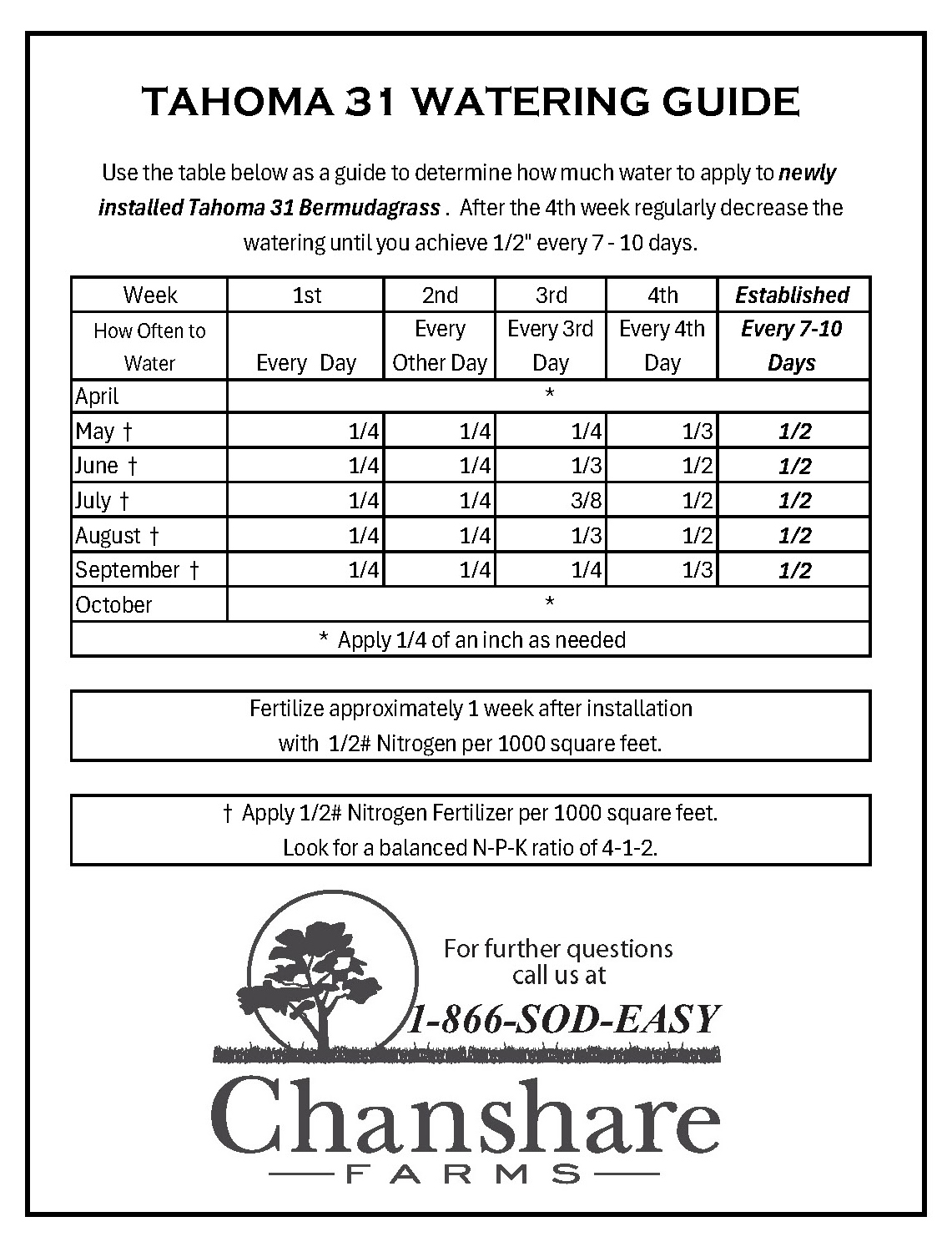
Below is a watering guide for Tahoma 31 Bermudagrass.
We will have supply of Tahoma 31 from our sister farms April – August 2027. We hope to start harvesting directly from our Utah farms sometime in 2027. For more information about our Tahoma 31 please call 435-854-3627.
Click here to download the Bermudagrass New Installation Guide.
Click here to download recommended Bermudagrass Maintenance Guide.
Click here to download specs for Tahoma 31.
FAQs
Tahoma 31 is triploid hybrid Bermudagrass developed for drought tolerance, cold tolerance, and wear resistance. It is a warm-season turfgrass that performs especially well in hot summer conditions and is well suited to many areas of the Intermountain West.
Once established, Tahoma 31 can require 50% less water than traditional Kentucky bluegrass. It has been studied at BYU since 2017 and has been proven to withstand extended periods without irrigation before showing significant drought stress. Actual watering needs vary based on weather, soil, location, and lawn conditions. Some homeowners have seen as much as 70% reduction in water use with Tahoma 31 over traditional Kentucky Bluegrass.
Yes! Drought tolerance is one of Tahoma 31’s key advantages. Research from BYU shows that Tahoma 31 didn’t show visible signs of drought stress up to 6 weeks with no irrigation in the heat of the summer. And recovery time from drought stress for Tahoma 31 was much shorter than Kentucky bluegrass.
Yes. Although Bermudagrass is a warm-season grass, Tahoma 31 has demonstrated unusually good cold tolerance. It has survived cold winter conditions in Denver with minimal dieback.
Tahoma 31 Bermudagrass is a warm-season grass.
As soon as soil temperatures rise above 45°F, it will start coming out of dormancy.
This occurs typically 4 to 6 weeks after Kentucky bluegrass.
Kentucky bluegrass is a cool-season grass and goes dormant in summer when temperatures exceed 85°F.
It thrives in summer heat, especially at temperatures above 85°F.
Yes. Like other warm-season grasses, Tahoma 31 naturally becomes dormant during colder weather. The lawn will typically lose its green color as temperatures drop (ground temperature dips below 45°F) and green up again as conditions become warm enough for active growth (ground temperatures raise above 45°F).
Yes. Tahoma 31 bermudagrass is highly wear tolerant and has been used on sports fields and golf courses. Its ability to withstand traffic makes it a strong option for areas that receive substantial use
Because Tahoma 31 Bermudagrass is a warm-season grass, installation is best timed when temperatures are favorable for active growth. In Utah this generally means Mid May through Mid September.
Chanshare Sod Farms supplies Tahoma 31 Bermudagrass and can provide information about current availability, delivery and installation. Availability can vary by season, so contact Chanshare directly for the most current information at 435-854-3627.